

403
Sorry!!
Error! We're sorry, but the page you were looking for doesn't exist.
UAE- Decoding the discipline


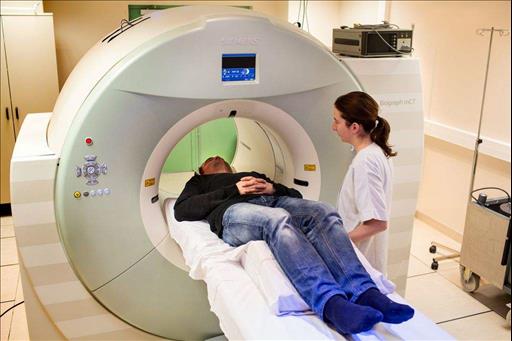
(MENAFN- Khaleej Times) Thanks to the availability of cutting-edge technology, hospitals today have access to the most advanced equipment that offer extremely detailed images, faster test results and provide the best treatment options available. Diagnosis has important implications for patient care and when it is accurate and timely, patients have the best opportunity for a positive health outcome, as clinical decision-making will be tailored to a correct understanding of the health problem. This is where the role of a radiologist comes to play. Radiologists specialise in diagnosing and treating disease and injury through the use of medical imaging techniques such as x-rays, computed tomography (CT), magnetic resonance imaging (MRI), positron emission tomography (PET), fusion imaging and ultrasound. Mammography is a special type of radiography that records the internal structures of breasts. X-ray imaging exams are recognised as one of the most valuable medical tools for a wide variety of examinations. They are used to non-invasively help diagnose disease, support medical and surgical treatment planning, guide medical personnel as they insert catheters or stents inside the body, and can assist in treating tumours, or remove blood clots or other blockages. The use of diagnostic imaging services is paramount in correctly documenting the course of any disease, as well as in assessing responses to the treatment being offered. Medical imaging is carried out by a team of medical professionals that include radiologists, radiographers, sonographers, medical physicists, nurses, biomedical engineers and other support staff that work together to optimise the well-being of patients. It is crucial at all major levels of healthcare. In public health and preventive medicine, as well as in both curative and palliative care, effective decisions depend on correct diagnoses made by these images. Over the years, medical imaging has led to a number of improvements in the diagnosis and treatment of numerous medical conditions in children and adults. Different modalities Each medical imaging procedure uses different technologies and techniques. CT, fluoroscopy and radiography all use ionising radiation to generate images of the body. All three techniques work on the same principle - an X-ray beam is passed through the body where a portion of it is either absorbed or scattered by internal structures and the remaining X-ray pattern is transmitted to a detector such as a film or a computer screen for recording or further processing. However, they differ in their purpose. For instance, in radiography a single image is recorded for later evaluation. In fluoroscopy, a continuous X-ray image is displayed on a monitor, allowing for real-time monitoring of a procedure or passage of a contrast agent through the body, while in CT, X-ray images are recorded as the detector moves around a patient's body. A computer reconstructs all these images into cross-sectional images of internal organs and tissues. If an imaging test is needed, radiologists will be able to carry those out to get the best possible results. They often consider different imaging tests available, study the risks and benefits, and determine how to carry it out. Here is a look at the there different types of radiology that help doctors make informed choices regarding the treatment required. Diagnostic: Diagnostic imaging uses plain X-ray radiology, CT, MRI, ultrasound and nuclear medicine imaging techniques to obtain images that are then interpreted to aid in the diagnosis of disease. Interventional: This form of radiology treats and diagnoses disease using imaging equipment. It is a minimally invasive process that uses X-ray, magnetic or ultrasound images to guide the procedure, which is conducted with plastic tubes called catheters inserted through an artery or vein. Radiation oncology: This process uses radiation to treat diseases such as cancer using radiation therapy. Cost of care The total cost of owning and maintaining radiology equipment can vary tremendously. For major radiology equipment, many organisations will purchase the equipment, while many outpatient centres may lease them. Some hospitals also consider hiring a dedicated in-house maintenance team as another option. The UAE has been an early adopter of innovative technologies in different fields. Advancements in technology have also played a key role in developing radiology in the country. The introduction of teleradiology, where patients' radiological procedures can be sent via an online network to any physician around the world, has positively impacted the speed and reliability of a patient's treatment. Teleradiology is becoming a significant component in the delivery of radiological services due to the high quality and speed of image transmission. Communication of images between radiologists, via local or distant networks, is now a widely available option to solicit a specialised opinion in selected cases. Radiology's role is central to cancer management today with a wide choice of tools and techniques available for the detection, staging and treatment of the disease. Imaging is second only to lab tests when it comes to the most valuable tools cancer care teams have at their disposal. Different radiological tests have become very helpful in screening as they can show precancerous lesions before they become malignant and cause symptoms. Medical imaging has truly become vital in early detection, diagnosis and treatment of cancer. In some cases, it is the first step to preventing the spread of cancer through detection and makes it possible to cure or eliminate the disease altogether. Over the past several years, the technology of radiology has expanded both in the variety and frequency of applications as well as the level of sophistication in applications. Examples of this expansion include the many forms of magnetic resonance imaging, magnetic resonance spectroscopy, functional magnetic resonance, multi-detector/multi-slice computed tomography, single photon and positron emission computed tomography, among others. In addition, new disciplines such as medical informatics and molecular biology offer exciting opportunities for radiology in both basic and applied research. The technological growth of radiology and its extension into unexplored regions of biomedical science and clinical medicine have been phenomenal and hold exciting prospects for the future. -

Legal Disclaimer:
MENAFN provides the
information “as is” without warranty of any kind. We do not accept any
responsibility or liability for the accuracy, content, images, videos,
licenses, completeness, legality, or reliability of the information
contained in this article. If you have any complaints or copyright issues
related to this article, kindly contact the provider above.
Comments
No comment