

403
Sorry!!
Error! We're sorry, but the page you were looking for doesn't exist.
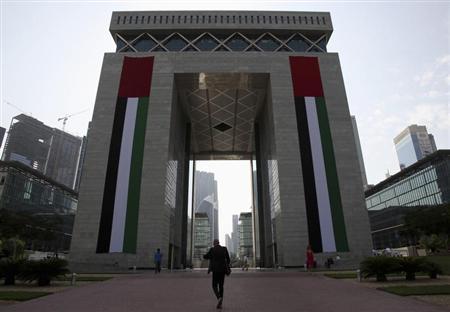
GCC equity markets 'offer appealing stock valuations'


(MENAFN- Arab News) JEDDAH: A recent Bank of America Merrill Lynch research report titled 'MENA & Frontier Observer Frontier markets screening increasingly more attractive: Focus on quality' says that GCC equity markets are looking increasingly attractive after the broadbased selloff since the summer. In this context the GCC markets currently represent a buying opportunity particularly with appealing stock valuations and stronger earnings momentum.
'There are broad based buying opportunities but stock selection is becoming key. We retain our bias for markets with robust macro attractive valuations consistent earnings delivery and/or superior earnings growth. These factors make the UAE our most preferred MENA market and Kuwait as our preferred GCC Frontier market. The sharp correction across frontier markets since the summer has also yielded strong opportunities across many other markets including Saudi Arabia. In this context we believe stock selection (rather than market selection) is becoming more crucial and advocate a focus on quality and mispriced opportunities' said Hootan Yazhari head of MENA & Frontier Markets Equity Research.
Hootan Yazhari said: 'As our most preferred attractively valued GCC market the UAE offers long term potential and healthy earnings momentum. The UAE is the only market with net earnings upgrades year-to-date and our top picks are Etisalat Emaar and ADCB. While in Saudi Arabia opportunities have risen as the market is no longer expensive but we believe it's time to get selectively bullish. Within Saudi Arabia the consumer space presents an attractive long-term opportunity and we reiterate our buy ratings on Al-Hokair and Al-Othaim.'
On the other hand the GCC macro story is likely to have peaked if oil prices stay low for long.
Twin deficits are expected as well as weaker real GDP growth and softer non-hydrocarbon sector growth on greater fiscal policy prudence.
A prolonged period of low oil prices and regional geopolitical threats remain the primary risks.
The realization of external risks and global risk aversion may cut market access to Dubai Inc risking a credit event.
Egypt benefits cyclically from lower oil prices but still needs to mobilize external financing given its geopolitical importance. Key remains to advance the structural reform agenda and mobilizing external finance.
'In our view the UAE economy is likely to soft land this year as suggested by only modest deceleration in high-frequency indicators' said Jean-Michel Saliba MENA economist.
'The near-term direct impact of lower oil prices on UAE is more muted than for GCC peers' said the economist.
'However the indirect impact through lower regional and domestic liquidity real estate external sector and indebtedness would be more pronounced if oil prices remain low for long. In the near-term we think Dubai should be able to tackle refinancing challenges. Nevertheless we expect large Dubai projects to be gradually phased over time' said Jean-Michel Saliba.
'We see strong Dubai government commitment to the timely completion of the Expo 2020. Disciplined fiscal policy remains paramount for Dubai government debt dynamics to take a stabilizing sustainable path' said the economist
Jean-Michel Saliba said: 'While in Saudi Arabia we think wider deficits cushion growth due to softer nonoil GDP growth risks on the government capex pipeline stable politics and unwavering oil policy. Economic activity remains cushioned in the near-term due to continued expansionary fiscal stance and still healthy credit growth. Overall on-budget capital expenditures are likely to be curtailed although strategic projects appear ring-fenced. This is likely to come at the cost of wide and unsustainable fiscal deficits. The absence of material adjustment is likely to imply a need for a sharper adjustment down the line if oil prices remain low for long. Given the rapid forex reserves drawdown domestic borrowing appears increasingly likely. Despite the increased fiscal strains we think that Saudi Arabia is unlikely to capitulate on its energy policy.'
Jean-Michel Saliba added: 'On the contrary Qatar remains the most resilient GCC economy in our opinion. We expect Qatari macro to continue outperforming GCC peers as World Cup capex spending appears set to continue. Qatar's fiscal and external breakeven oil price remains among the lowest in the GCC at $66/bbl and $60bbl respectively. Regionally stabilizing oil market share increases downside risk to oil prices. Higher uncertainty may have a negative wealth effect and implications on business and consumer confidence while lower marginal oil liquidity weakens money supply and private sector credit growth' said the economist.
'There are broad based buying opportunities but stock selection is becoming key. We retain our bias for markets with robust macro attractive valuations consistent earnings delivery and/or superior earnings growth. These factors make the UAE our most preferred MENA market and Kuwait as our preferred GCC Frontier market. The sharp correction across frontier markets since the summer has also yielded strong opportunities across many other markets including Saudi Arabia. In this context we believe stock selection (rather than market selection) is becoming more crucial and advocate a focus on quality and mispriced opportunities' said Hootan Yazhari head of MENA & Frontier Markets Equity Research.
Hootan Yazhari said: 'As our most preferred attractively valued GCC market the UAE offers long term potential and healthy earnings momentum. The UAE is the only market with net earnings upgrades year-to-date and our top picks are Etisalat Emaar and ADCB. While in Saudi Arabia opportunities have risen as the market is no longer expensive but we believe it's time to get selectively bullish. Within Saudi Arabia the consumer space presents an attractive long-term opportunity and we reiterate our buy ratings on Al-Hokair and Al-Othaim.'
On the other hand the GCC macro story is likely to have peaked if oil prices stay low for long.
Twin deficits are expected as well as weaker real GDP growth and softer non-hydrocarbon sector growth on greater fiscal policy prudence.
A prolonged period of low oil prices and regional geopolitical threats remain the primary risks.
The realization of external risks and global risk aversion may cut market access to Dubai Inc risking a credit event.
Egypt benefits cyclically from lower oil prices but still needs to mobilize external financing given its geopolitical importance. Key remains to advance the structural reform agenda and mobilizing external finance.
'In our view the UAE economy is likely to soft land this year as suggested by only modest deceleration in high-frequency indicators' said Jean-Michel Saliba MENA economist.
'The near-term direct impact of lower oil prices on UAE is more muted than for GCC peers' said the economist.
'However the indirect impact through lower regional and domestic liquidity real estate external sector and indebtedness would be more pronounced if oil prices remain low for long. In the near-term we think Dubai should be able to tackle refinancing challenges. Nevertheless we expect large Dubai projects to be gradually phased over time' said Jean-Michel Saliba.
'We see strong Dubai government commitment to the timely completion of the Expo 2020. Disciplined fiscal policy remains paramount for Dubai government debt dynamics to take a stabilizing sustainable path' said the economist
Jean-Michel Saliba said: 'While in Saudi Arabia we think wider deficits cushion growth due to softer nonoil GDP growth risks on the government capex pipeline stable politics and unwavering oil policy. Economic activity remains cushioned in the near-term due to continued expansionary fiscal stance and still healthy credit growth. Overall on-budget capital expenditures are likely to be curtailed although strategic projects appear ring-fenced. This is likely to come at the cost of wide and unsustainable fiscal deficits. The absence of material adjustment is likely to imply a need for a sharper adjustment down the line if oil prices remain low for long. Given the rapid forex reserves drawdown domestic borrowing appears increasingly likely. Despite the increased fiscal strains we think that Saudi Arabia is unlikely to capitulate on its energy policy.'
Jean-Michel Saliba added: 'On the contrary Qatar remains the most resilient GCC economy in our opinion. We expect Qatari macro to continue outperforming GCC peers as World Cup capex spending appears set to continue. Qatar's fiscal and external breakeven oil price remains among the lowest in the GCC at $66/bbl and $60bbl respectively. Regionally stabilizing oil market share increases downside risk to oil prices. Higher uncertainty may have a negative wealth effect and implications on business and consumer confidence while lower marginal oil liquidity weakens money supply and private sector credit growth' said the economist.

Legal Disclaimer:
MENAFN provides the
information “as is” without warranty of any kind. We do not accept any
responsibility or liability for the accuracy, content, images, videos,
licenses, completeness, legality, or reliability of the information
contained in this article. If you have any complaints or copyright issues
related to this article, kindly contact the provider above.
Comments
No comment