

403
Sorry!!
Error! We're sorry, but the page you were looking for doesn't exist.
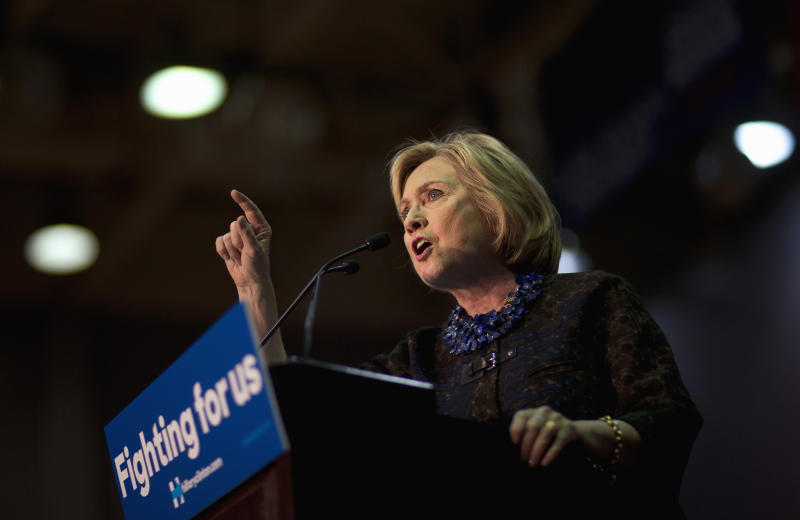
Democrats in US debate terrorism


(MENAFN- Arab News) DES MOINES: Hillary Rodham Clinton cast herself as America's strongest leader in a scary world during Saturday night's Democratic presidential debate even as she found herself forced to defend her own role during the rise of the Daesh militants.
'This election is not only about electing a president it's also about choosing our next commander in chief' Clinton declared in the Democrats' second debate of the presidential campaign. 'All of the other issues we want to deal with depend upon us being secure and strong.'
Amid the backdrop of global anxiety over Friday's attacks in Paris Clinton found herself fending off questions about not only her foreign policy record but her economic ties with both Vermont Sen. Bernie Sanders and former Maryland Gov. Martin O'Malley painting the former senator from New York as a lackey for Wall Street and corporate interests. 'Let's not be naive about it' said Sanders noting that Clinton collected millions in campaign donations from Wall Street bankers. 'They expect to get something. Everybody knows that.'
The barbs marked a far more aggressive shift in a primary race that has so far been notable for its civility. Democrats have spent months boasting about the substantive tone of their contest attempting to set up a favorable early contrast with the 'carnival barker' insults of the crowded Republican primary. Since the Democrats' first debate a month ago Clinton has built a lead in the early voting states gains that have come amid other signs the party is coalescing behind her. But the nomination fight is far from over.
Saturday night Clinton faced criticism of her national security record when Sanders traced the current instability in the Middle East to the US Senate's vote including Clinton's to authorize military action in Iraq in 2002. He said that US invasion 'unraveled the region.'
The former secretary of state fought back saying terrorism has been erupting for decades specifically mentioning the Sept. 11 2001 attacks. She said the recent unrest in Libya and other parts of the Middle East is symptomatic of an 'arc of instability from North Africa to Afghanistan.'
She rejected the idea that she and the rest of the Obama administration underestimated the growing threat of the Daesh.
The back-and-forth revealed a foreign policy split within the Democratic Party with Sanders playing to the anti-war activists who boosted then-Illinois Sen. Barack Obama to victory in 2008.
Sanders argued for a far more hands-off approach advocating for Muslim countries to lead the fight and declaring that the war against Daesh militants is about the 'soul of Islam.' Clinton has a history of advocating for more robust involvement across the globe both as a presidential candidate eight years ago and as Obama's secretary of state. In recent weeks she has called for a more aggressive US role in the Syrian conflict including a no-fly zone over the area a move the Obama administration opposes. But she stood by her opposition to seeking a formal declaration of war against the Daesh. All the candidates denounced the attacks and the debate began on a solemn note with a moment of silence followed by the previously unplanned foreign policy questions.
The conversation later pivoted to economic issues with the candidates tangling over how to pay for their plans to expand college affordability family leave and prescription drug coverage. The conversation revealed how Sanders' message has helped shift the party to the left on some economic issues.
All three agreed that wealthy citizens and corporations should pay more in taxes to benefit the middle class. They tangled over how high to increase the minimum wage with Clinton backing a $12-per-hour federal floor while Sanders and O'Malley said $15 an hour the rate being pushed by a campaign of fast-food workers and labor unions.
And they fought over the degree to which they would curtail large financial institutions with Sanders describing Wall Street's business model as 'greed and fraud' a startling judgment for a major presidential candidate.
'I'm not that much of a socialist compared to Eisenhower' joked Sanders saying the former president backed a 90 percent marginal tax rate.
'This election is not only about electing a president it's also about choosing our next commander in chief' Clinton declared in the Democrats' second debate of the presidential campaign. 'All of the other issues we want to deal with depend upon us being secure and strong.'
Amid the backdrop of global anxiety over Friday's attacks in Paris Clinton found herself fending off questions about not only her foreign policy record but her economic ties with both Vermont Sen. Bernie Sanders and former Maryland Gov. Martin O'Malley painting the former senator from New York as a lackey for Wall Street and corporate interests. 'Let's not be naive about it' said Sanders noting that Clinton collected millions in campaign donations from Wall Street bankers. 'They expect to get something. Everybody knows that.'
The barbs marked a far more aggressive shift in a primary race that has so far been notable for its civility. Democrats have spent months boasting about the substantive tone of their contest attempting to set up a favorable early contrast with the 'carnival barker' insults of the crowded Republican primary. Since the Democrats' first debate a month ago Clinton has built a lead in the early voting states gains that have come amid other signs the party is coalescing behind her. But the nomination fight is far from over.
Saturday night Clinton faced criticism of her national security record when Sanders traced the current instability in the Middle East to the US Senate's vote including Clinton's to authorize military action in Iraq in 2002. He said that US invasion 'unraveled the region.'
The former secretary of state fought back saying terrorism has been erupting for decades specifically mentioning the Sept. 11 2001 attacks. She said the recent unrest in Libya and other parts of the Middle East is symptomatic of an 'arc of instability from North Africa to Afghanistan.'
She rejected the idea that she and the rest of the Obama administration underestimated the growing threat of the Daesh.
The back-and-forth revealed a foreign policy split within the Democratic Party with Sanders playing to the anti-war activists who boosted then-Illinois Sen. Barack Obama to victory in 2008.
Sanders argued for a far more hands-off approach advocating for Muslim countries to lead the fight and declaring that the war against Daesh militants is about the 'soul of Islam.' Clinton has a history of advocating for more robust involvement across the globe both as a presidential candidate eight years ago and as Obama's secretary of state. In recent weeks she has called for a more aggressive US role in the Syrian conflict including a no-fly zone over the area a move the Obama administration opposes. But she stood by her opposition to seeking a formal declaration of war against the Daesh. All the candidates denounced the attacks and the debate began on a solemn note with a moment of silence followed by the previously unplanned foreign policy questions.
The conversation later pivoted to economic issues with the candidates tangling over how to pay for their plans to expand college affordability family leave and prescription drug coverage. The conversation revealed how Sanders' message has helped shift the party to the left on some economic issues.
All three agreed that wealthy citizens and corporations should pay more in taxes to benefit the middle class. They tangled over how high to increase the minimum wage with Clinton backing a $12-per-hour federal floor while Sanders and O'Malley said $15 an hour the rate being pushed by a campaign of fast-food workers and labor unions.
And they fought over the degree to which they would curtail large financial institutions with Sanders describing Wall Street's business model as 'greed and fraud' a startling judgment for a major presidential candidate.
'I'm not that much of a socialist compared to Eisenhower' joked Sanders saying the former president backed a 90 percent marginal tax rate.

Legal Disclaimer:
MENAFN provides the
information “as is” without warranty of any kind. We do not accept any
responsibility or liability for the accuracy, content, images, videos,
licenses, completeness, legality, or reliability of the information
contained in this article. If you have any complaints or copyright issues
related to this article, kindly contact the provider above.
Comments
No comment