






403
Sorry!!
Error! We're sorry, but the page you were looking for doesn't exist.
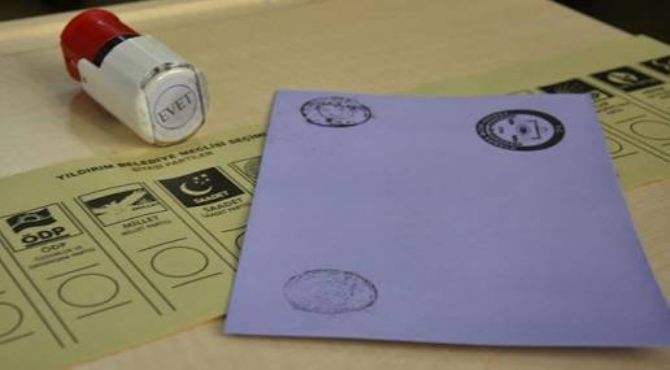
Turkey- Drop in consumer confidence may reflect in the ballot box
(MENAFN- The Journal Of Turkish Weekly) It is an undeniable fact that the economy has played a dominant role in the Justice and Development Party’s (AKP) 13-year rule. The voter has supported its economic performance. The consumer confidence index (CCI) is an indicator that measures the confidence of consumers on markets and generally on the economic situation; it also shows the expectations of the consumer for the future as well as its spending and saving tendencies. The CCI is determined according to the Consumer Trend Survey done monthly by the Turkish Statistics Institute (TÜK) and Central Bank. It is released by TÜK every month. Because of the scarcity of data we can only start from 2007 to assess the relationship of the CCI and election results. When we review the CCI and election result relationship in those years we see that when the CCI is high more votes are cast for the AKP; when the confidence is down votes are also down. While Turkey is going to the polls again on Nov. 1 there is deterioration in the confidence of the consumer. It is now wondered whether this dissatisfaction will reflect in the ballot box partially or completely. Not temporary… The AKP came to power with the general elections on Nov. 3 2002 as the representative of political Islam. At the beginning it was regarded by some as a political organization of the time that would rule for a temporary period having benefitted from the erosion of the center right and center left. People gave the AKP one term or at the most two terms; November 2015 will mark 13 full years of its rule. After 2002 in the general election of 2007 and 2011 it increased its vote rate from 34 percent to almost 49 percent. In local elections in 2004 2009 and 2014 the AKP was again first. In 2007 the founder of the AKP Abdullah Gül was elected president by the parliament. In 2014 another founder and leader of the movement Recep Tayyip Erdoan was elected president by popular vote a method used for the first time with nearly 52 percent of the votes. The referendum for constitutional amendments was held on 2010 and the nearly 58 percent approval was considered as an AKP victory. In the June 7 elections of this year the 40.9 percent the AKP received were not enough for a one-party rule and it was named as a historic date. Now eyes are on Nov. 1 when new elections will be held. It is now a generally accepted statement that the AKP is not only a “government” but is actually in the process of building a “regime.” Voter support The AKP’s voter support of the past 13 years is the most important factor legitimizing the regime. The AKP came to power with 34 percent of the votes on Nov. 3 2002 and increased its votes every year. There was a slight drop in the 2009 local elections; otherwise it went from 30 percent to 40 percent to the brink of 50 percent and started falling in 2015. How did this voter support grow and start to decrease? Political Islam parties of which did not reach the 20th percentile in the 1970s 1980s or 1990s seized power in 2002 with 34 percent increasing its votes every year and thus building an Islamic regime. The biggest role in this was the economic growth and economic background. What brought the AKP to power in 2002 was not its economic pledges. What made the voter chose the AKP was mostly the consequences of the bitter pill that the 59th coalition government of 1999-2002 had to resort to overcome the 2001 crisis. The coalition government led by Prime Minister Bülent Ecevit partnered with the central right Motherland Party (ANAVATAN) Democratic Party (DP) and the Nationalist Movement Party (MHP). It experienced the 2001 crisis because of problems built up through the 1990s. The central left central right parties and the MHP brought Kemal Dervi to steer the economy through the 2001 crisis; a bitter IMF-controlled pill was introduced and as a result the implementers of this bitter pill paid a heavy cost in the 2002 elections. At the same time they left “boneless” public financing the infrastructure for privatization and a functioning relationship with theIMFto the neoliberal AKP set up by the Gül-Erdoan duo breaking away from the Welfare Party (RP). The world of the 2002-2007 period also helped this rectified economy. The AKP government coincided with major liquidity abundance in the world just before the global crisis which meant plenty of external resources and high growth – even though it created the current account deficit. Those masses who had suffered in 2001 voted for the AKP over and over again when there was no reasonable alternative. The AKP on the other hand having found the unique climate to implement their regime scenarios started building a regime full throttle. The economic luck of the AKP The AKP inherited the vital IMF/Kemal Dervi-produced reforms in banking public sector privatization in 2002. Inflation was rapidly dropping and with price stability a reformed Turkey climate coincided with the abundance of international liquidity launching a rapid foreign investment inflow. The foreign capital inflow which was not even $1 billion in the Özal era of 1980s reached only $4 billion in the coalition governments’ era of 1990s but it averaged nearly $30 billion in the first five years of AKP rule. The uninterrupted growth from 2003 to 2007 reflected in the CCI thus in votes. In May 2007 the CCI was up to 82.3. In the elections of the same month the AKP won 46.6 percent votes. The economy felt a tremor in 2008 with the effect of the global crisis. The real effect of the crisis was felt in 2009; that year the economy shrank 5 percent. Foreign investors withdrew. Economic shrinkage and increasing inflation shook the consumer. The CCI was measured 61.6 in March 2009. Local elections the same month reflected in the votes and the AKP received 38.3 percent of the votes 8.3 points less than 2007. The 2009 crisis was diverted through measures taken with the mobilization of the public budget without deepening and without further settling. The return of the foreign investor was achieved. With the annual average of $60 billion foreign money inflow in 2010 and 2011 a shocking growth rate of 9 percent was reached. Under these conditions by mid-2011 the confidence of the consumer peaked with 83.2 bringing 49.8 percent of the votes for the AKP. Start of the fall The 2011 growth raised consumer satisfaction and AKP votes but with the low foreign exchange rate the current account deficit exploded. In light of the high deficit the AKP had to cool down the economy; it geared down and finished the year with 2 percent growth. In 2013 only 4 percent growth was achieved. The tempo of growth fell again in 2014 to 2.9 percent.
Political fragilities were added to economic fragilities. The rising terror of the Islamic State of Iraq and the Levant in Iraq and Syria and its image of closeness with the AKP added geopolitical risks to existing ones. This outlook pulled down the country’s credibility prompting foreigners to leave rapidly. In the 2014 local elections the AKP received 43.4 percent votes some 6.4 points less than 2011. In the same month the CCI was 72.7 some 10 points less than its 2011 level.
By Mustafa Sönmez
Political fragilities were added to economic fragilities. The rising terror of the Islamic State of Iraq and the Levant in Iraq and Syria and its image of closeness with the AKP added geopolitical risks to existing ones. This outlook pulled down the country’s credibility prompting foreigners to leave rapidly. In the 2014 local elections the AKP received 43.4 percent votes some 6.4 points less than 2011. In the same month the CCI was 72.7 some 10 points less than its 2011 level.
By Mustafa Sönmez

Legal Disclaimer:
MENAFN provides the
information “as is” without warranty of any kind. We do not accept
any responsibility or liability for the accuracy, content, images,
videos, licenses, completeness, legality, or reliability of the information
contained in this article. If you have any complaints or copyright
issues related to this article, kindly contact the provider above.
Most popular stories
Market Research

More Story






Comments
No comment