

403
Sorry!!
Error! We're sorry, but the page you were looking for doesn't exist.
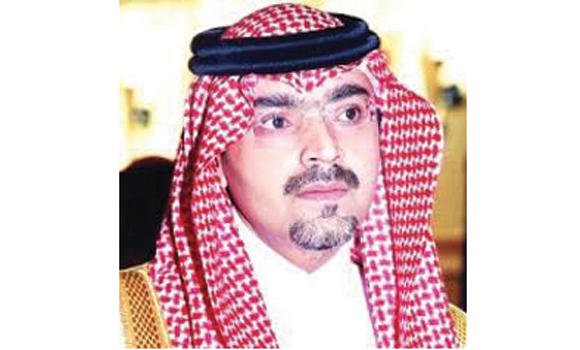
KSA businessman gives 10m for Islamic law center at Yale


(MENAFN- Arab News) JEDDAH: A Saudi businessman has donated $10 million to Yale Law School to establish what school officials hope will become the country's top center for the study of Islamic law.
Abdullah Kamel son of renowned Saudi businessman and philanthropist Saleh Kamel made the announcement after meetings with university representatives including Yale President Peter Salovey. Kamel chief executive of the Dallah Albaraka Group banking and real estate enterprise in Saudi Arabia has sponsored a lecture series on Islamic law for the last three years.
Yale officials say the Abdallah S. Kamel Center for the Study of Islamic Law and Civilization reflects a growing interest at Yale and other institutions in Islamic law history and culture.
'The contemporary challenges of Islamic law are broadly relevant to political events throughout the entire Islamic world and those are developments that are watched by a much larger audience of people who in many cases have not much knowledge at all of the history and traditions if Islamic law' said Professor Anthony Kronman a codirector of the center who was first introduced to Kamel by a Yale Law graduate who works as an attorney for the Saudi businessman.
For two decades Harvard Law School has had its own Islamic legal studies program established with support from the Saudi king.
Abdullahi An-Na'im who teaches Islamic law at Emory Law School said he considers the Islamic legal studies program at Harvard a disappointment because few faculty members took an interest and it has been treated as an isolated entity at the law school. He said it remains to be seen how seriously the Yale faculty will take Islamic law as a field of human jurisprudence.
Kronman said Yale aims to have the best program of its kind in the United States if not the world and one objective is to ensure the center's work is integrated into the life of the law school.
Kronman said Islamic law is all the more deserving of intellectual attention because many people have views of the subject that are not very well informed.
'It's the responsibility of universities to teach and instruct and that obligation applies with particular force where an issue or a subject tends to be viewed in an incomplete or inadequate or even caricatured way' Kronman said. 'There the responsibility to teach and enlighten is even stronger.'
The center aims to support research fellowships a rotation of visiting professors and a tenured professorship in the field of Islamic law.
Abdullah Kamel son of renowned Saudi businessman and philanthropist Saleh Kamel made the announcement after meetings with university representatives including Yale President Peter Salovey. Kamel chief executive of the Dallah Albaraka Group banking and real estate enterprise in Saudi Arabia has sponsored a lecture series on Islamic law for the last three years.
Yale officials say the Abdallah S. Kamel Center for the Study of Islamic Law and Civilization reflects a growing interest at Yale and other institutions in Islamic law history and culture.
'The contemporary challenges of Islamic law are broadly relevant to political events throughout the entire Islamic world and those are developments that are watched by a much larger audience of people who in many cases have not much knowledge at all of the history and traditions if Islamic law' said Professor Anthony Kronman a codirector of the center who was first introduced to Kamel by a Yale Law graduate who works as an attorney for the Saudi businessman.
For two decades Harvard Law School has had its own Islamic legal studies program established with support from the Saudi king.
Abdullahi An-Na'im who teaches Islamic law at Emory Law School said he considers the Islamic legal studies program at Harvard a disappointment because few faculty members took an interest and it has been treated as an isolated entity at the law school. He said it remains to be seen how seriously the Yale faculty will take Islamic law as a field of human jurisprudence.
Kronman said Yale aims to have the best program of its kind in the United States if not the world and one objective is to ensure the center's work is integrated into the life of the law school.
Kronman said Islamic law is all the more deserving of intellectual attention because many people have views of the subject that are not very well informed.
'It's the responsibility of universities to teach and instruct and that obligation applies with particular force where an issue or a subject tends to be viewed in an incomplete or inadequate or even caricatured way' Kronman said. 'There the responsibility to teach and enlighten is even stronger.'
The center aims to support research fellowships a rotation of visiting professors and a tenured professorship in the field of Islamic law.

Legal Disclaimer:
MENAFN provides the
information “as is” without warranty of any kind. We do not accept any
responsibility or liability for the accuracy, content, images, videos,
licenses, completeness, legality, or reliability of the information
contained in this article. If you have any complaints or copyright issues
related to this article, kindly contact the provider above.
Comments
No comment