

Questions over recovery of China's lost marbles


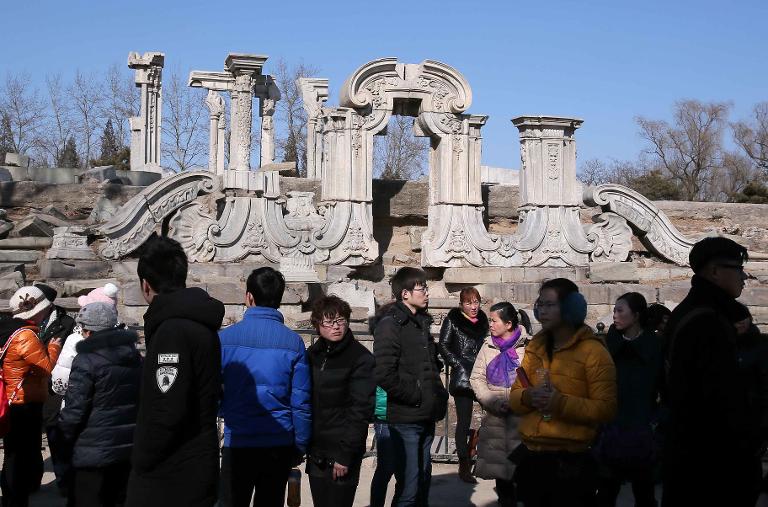
(MENAFN- AFP) China has long sought to recover treasures it says were looted by foreigners, but a tycoon's $1.6 million deal for the return of seven white marble columns from Norway is raising unusual debate on the issue.Critics have openly challenged the motives of real estate developer Huang Nubo, whose donation to the KODE Art Museums of Bergen paved the way for the return of the Old Summer Palace relics, and some argued they should not be "bought back". "They robbed us and then returned the marbles to us -- I can't work out if I'm happy or not," Beijing student Guo Peida told AFP at the ruins of the palace in Beijing, looted by invading Anglo-French forces in 1860."They originally belong to China," he added. "You wouldn't be happy if I stole money from you then returned it."Plundered or acquired art is a worldwide issue, with the Egyptian Rosetta Stone, the Elgin Marbles taken from the Parthenon in Greece to Britain 200 years ago and Nigeria's Benin Bronzes just a few examples.The subject is especially political in China, where the ruling Communist Party consistently seeks to bolster its legitimacy by reminding citizens of the "century of national humiliation" the country suffered at the hands of foreign powers from the mid-19th century."The rhetoric has sometimes been more heated and its claims more nationalist in their justification" in China, noted James Cuno, president and chief executive of the J. Paul Getty Trust, whose Getty Museum has a stunning collection of antiquities from around the world.Chinese authorities and collectors have been actively buying up works considered of national importance, said Cuno, author of "Who Owns Antiquity?""There have also been a number of high profile restitution cases," he added. "There is every indication that this will only increase as Chinese nationalism and economic development continue to rise."But while China's leaders cast themselves as righteous guardians of the country's cultural patrimony, critics point out that vast numbers of relics, buildings and examples of heritage have been destroyed at the hands of the Communist authorities, in both the chaos of the 1966-1976 Cultural Revolution and the tide of construction and urbanisation that has swept the country in recent years.Mao's upheaval included a campaign against the "Four Olds" -- "old customs, old culture, old habits and old ideas" -- and in an online debate on the columns, a commenter named Pei Shi wrote: "Actually, most of China's domestic relics were wrecked in the wave of unprecedented looting and destruction that took place... during the Cultural Revolution."Author Jasper Becker has also described China's campaign to blame foreigners for the loss of its cultural heritage as drawing "the astonishment of many familiar with its past record".- 'National humiliation'-

Legal Disclaimer:
MENAFN provides the
information “as is” without warranty of any kind. We do not accept any
responsibility or liability for the accuracy, content, images, videos,
licenses, completeness, legality, or reliability of the information
contained in this article. If you have any complaints or copyright issues
related to this article, kindly contact the provider above.
Comments
No comment